

- May 21, 2026
- Posted by: Renu Jangra
- Categories:
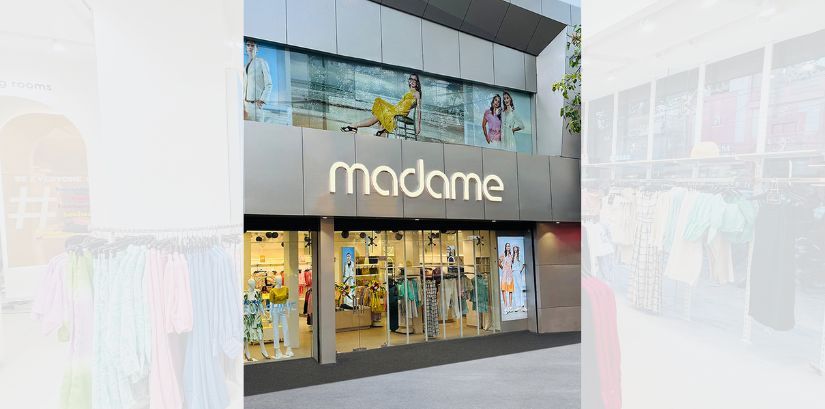
The sign outside is easy to miss if you’re not looking for it.
Inside, the store is compact, tightly packed, every rack doing its bit. A young woman—college-going, maybe—walks in with a friend.
She scans quickly, then slows down. A denim jacket catches her eye. She checks the price, runs her hand over the fabric, holds it up against herself in the mirror.
There’s a short conversation. A small calculation. She doesn’t rush it.
A few hundred kilometres away, in Jalandhar—at Eastwood Village on the Grand Trunk Road—the rhythm is familiar. Different accents, same decisions. What to pick. What to leave. What feels worth it.
This is where Madame’s business takes shape.
Madame is the flagship women’s western wear brand of Jain Amar Clothing, built over two decades into a network of more than 150 exclusive brand outlets and over 500 retail points across India.
Bootstrapped and profitable, nearly 65% of its sales come from North India. Not just the big cities, but towns like these—where fashion is less about runway trends and more about what fits into a life that is opening up, step by step.
KYC…KNOW YOUR CUSTOMER
The customer here isn’t chasing labels. She is assembling them.
A top for college. A dress for a function. Something new for a birthday, maybe. The purchase is rarely impulsive. It sits somewhere between want and justification. Price matters, but so does how it looks.
Madame fits into that equation easily. It offers what feels current without feeling out of reach.
“Volume wise… 60% comes from tier II and III,” says Akhil Jain, founder and CEO of Madame.
That skew shapes the business. Here’s how. While smaller towns drive frequency, metros push ticket size. So, there are two engines and one brand.
The network is not accidental.
A large part of Madame’s expansion has come through partners who already understand their local markets.
Over half its franchisees are existing dealers—people who have worked with the company before. The relationship travels before the store does.
That familiarity shows up in small ways. Location choices. Store sizes. Inventory mix. Nothing feels imposed. It is adjusted to what sells in that catchment.
Jain sees this as an advantage. “We don’t impose a format. People on the ground understand their customer in a better way,” he reckons.
The product follows a similar logic. It stays close to trends without chasing extremes. The idea is to remain accessible—current enough to feel relevant, priced in a way that keeps the purchase within reach.